Commercial aluminium louvres, Brisbane:
the Pantheon series.
Pantheon is Invicta Industries' proprietary range of six extruded-aluminium louvre systems for commercial facades, plant rooms and car parks, designed and fabricated in Brendale, Queensland. Each system is engineered for known, tested performance: rain-defence class, aerodynamic class and free open area you can specify with confidence. Figures are CFD-tested (ANSYS) to AS/NZS 4740:2025.
Six systems. One engineered family.
Named after gods, sized for the job. Choose on rain-defence class, airflow and free open area, then configure and specify to the project. Working from a US-origin specification, these are the same systems your documents call louvers.
What each Pantheon system is for.
Zeus: the high-output 150mm louvre
Zeus is the deepest blade in the range at 150mm and carries Class B rain defence under AS/NZS 4740:2025. It is the default choice where a facade needs a lot of air through a lot of louvre: plant-room walls, car-park ventilation and mechanical intake or exhaust behind a facade line. Zeus is on the towers at 41 George Street and 50 Quay Street in the Brisbane CBD.
Zeus Hydra-Shield: Zeus with Class A rain defence
Hydra-Shield is the Zeus blade system with a 3mm perforated aluminium front sheet. The shield lifts rain defence to Class A for high-exposure elevations, and it costs pressure drop rather than blade area, so it suits openings where the fan can carry the extra resistance. Specify it for the most exposed facades.
Odin: Class A rain defence with aerodynamic Class 1
Odin is the performance profile: a 150mm system that is the only Pantheon louvre rated both Class A for rain defence and Class 1 aerodynamically. Its blades overlap, so there is no straight line of sight through the panel, and it is the only profile whose blades can be set horizontal or vertical. Specify Odin where airflow has to hold up alongside weather performance, such as plant intakes on exposed elevations.
Thor: the 100mm louvre
Thor is the 100mm blade, rated Class C for rain defence, for facades where a 150mm louvre is too deep for the reveal or the framing. It is the workhorse on residential and mixed-use projects: Thor runs across the facade at Allere, West Village and into the plant screens at 50 Quay Street.
Magni: the compact 50mm airflow louvre
Magni is the 50mm profile, rated Class D, built for ducted and plant applications where air movement matters more than weather. It is also the infill profile for Invicta's access and protective systems: gas louvre doors, booster cabinets and service access panels use an RHS frame with Magni blades.
Loki: the 60mm screening profile
Loki is a 60mm blade screen, not a performance louvre. It carries no rain-defence or aerodynamic rating and is chosen for its look: a continuous horizontal louvre line for plant concealment, facade rhythm and privacy. For a rated screening louvre, use Thor or Zeus; for batten screening, see Screening Systems.
Louvres, installed.
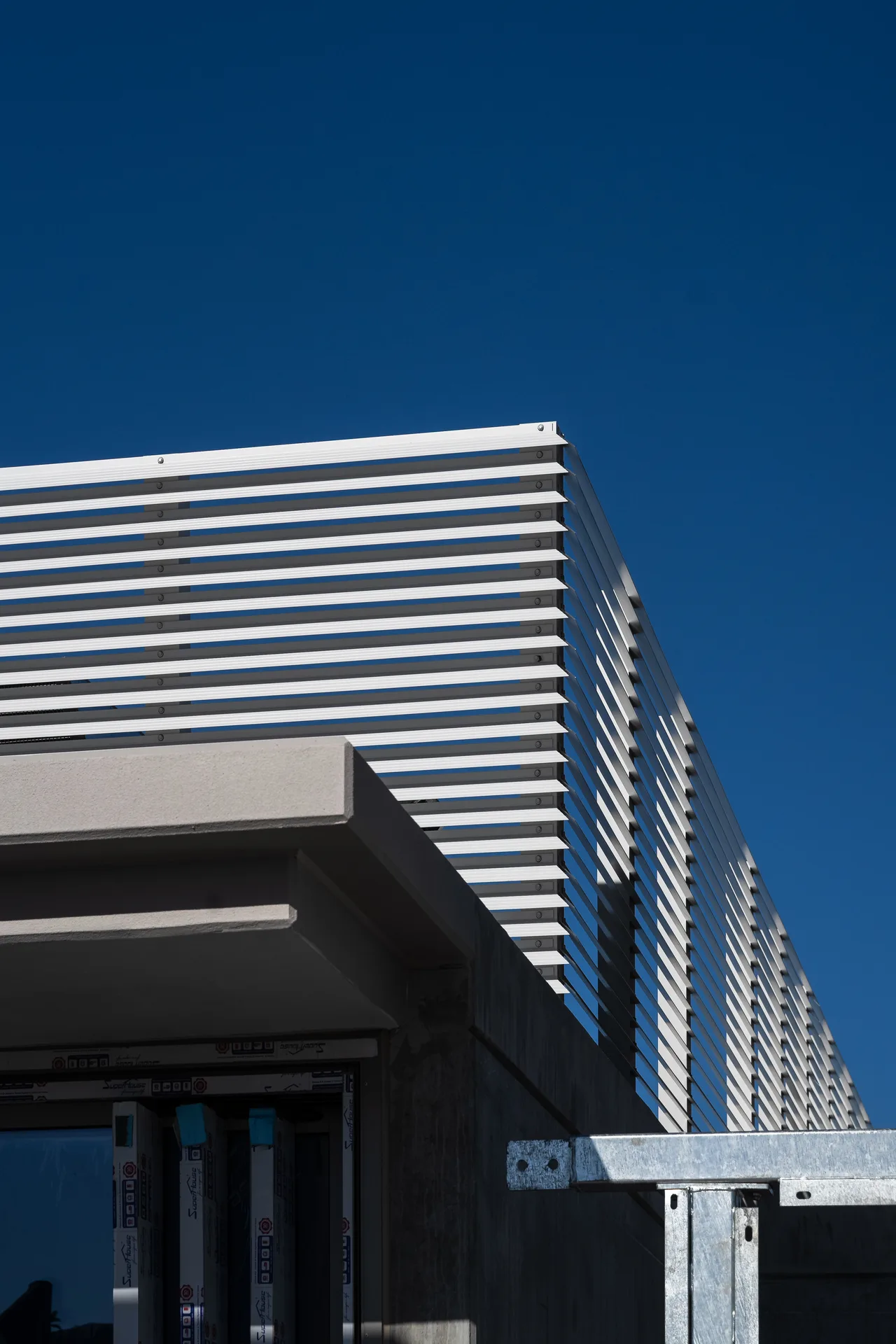
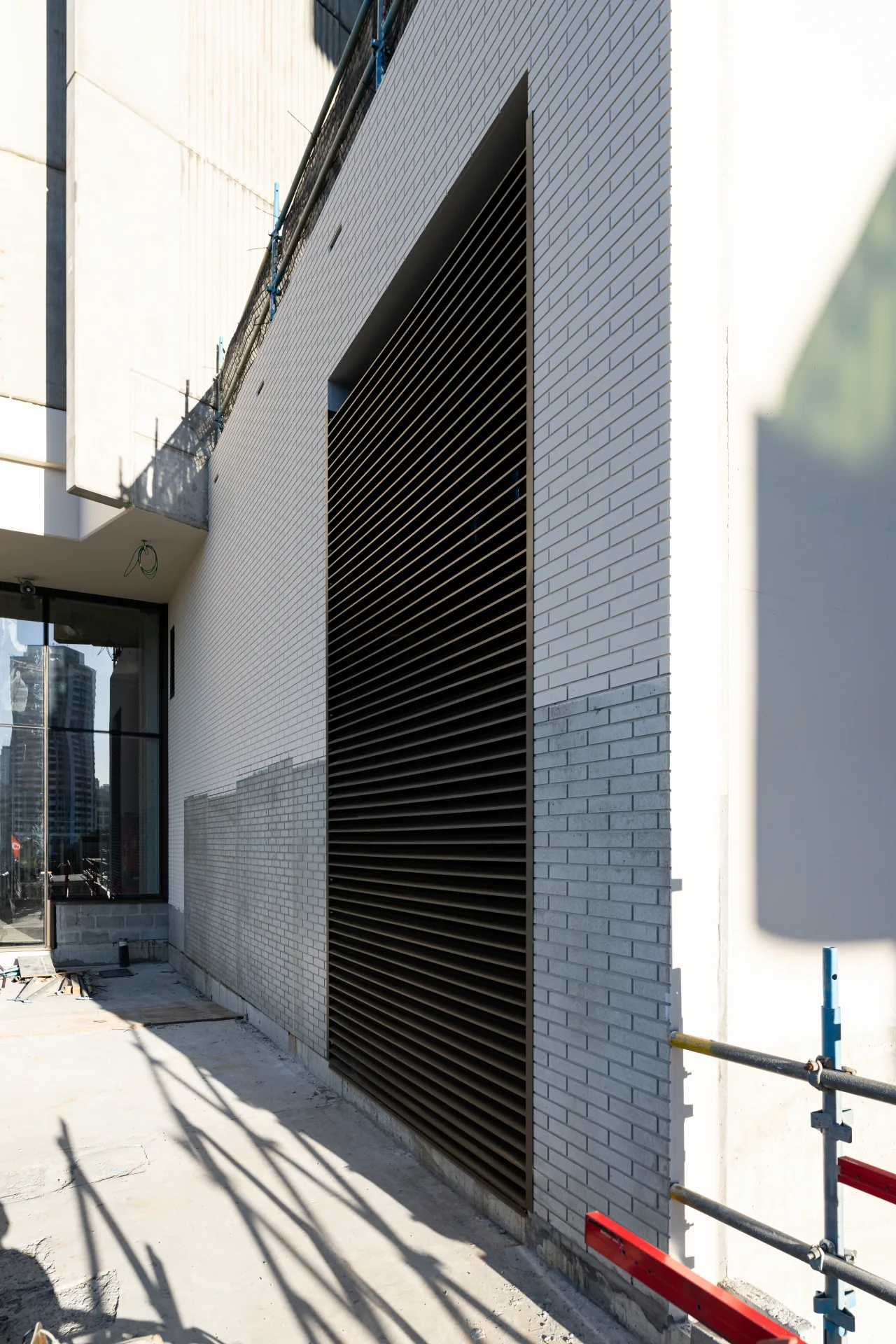
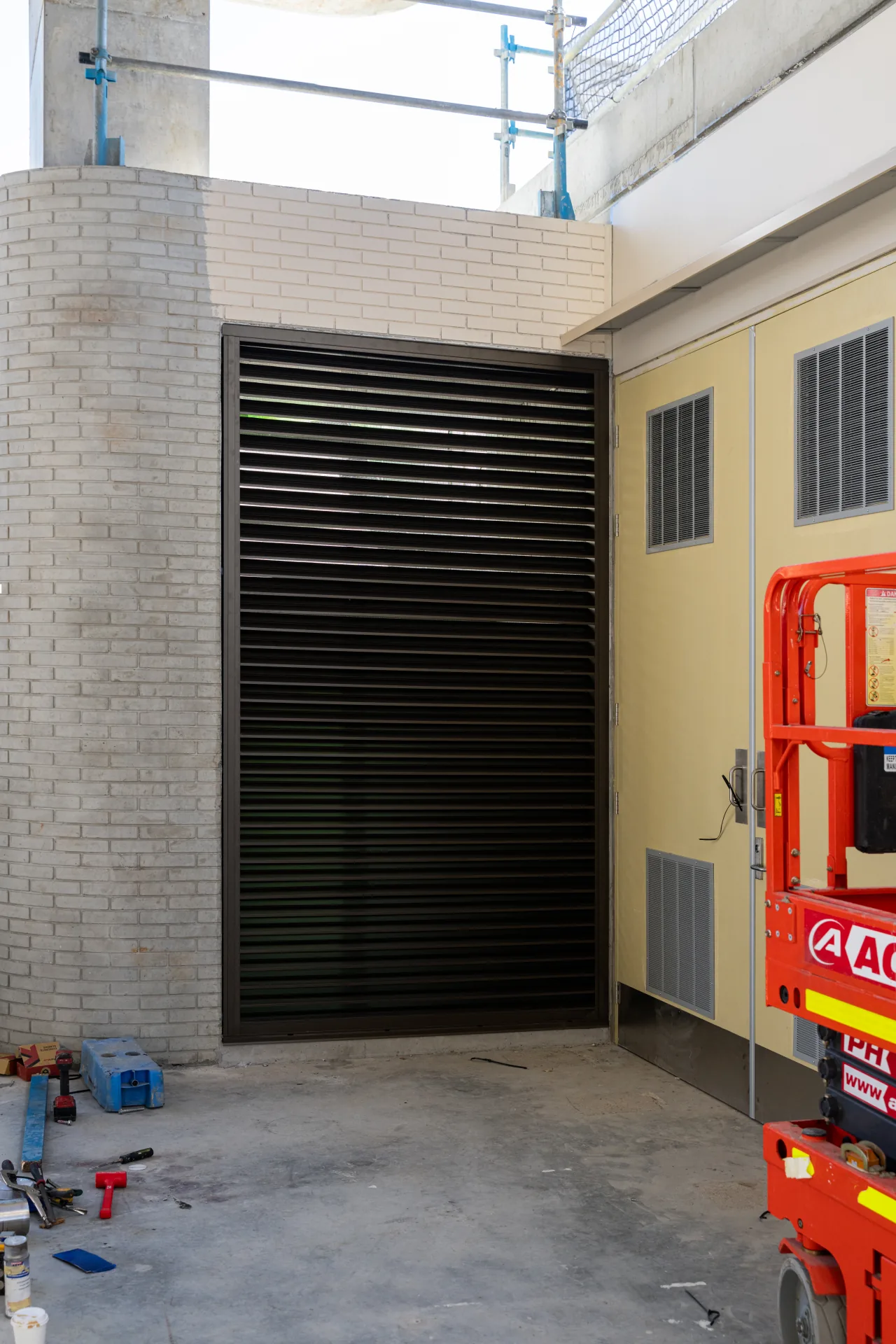
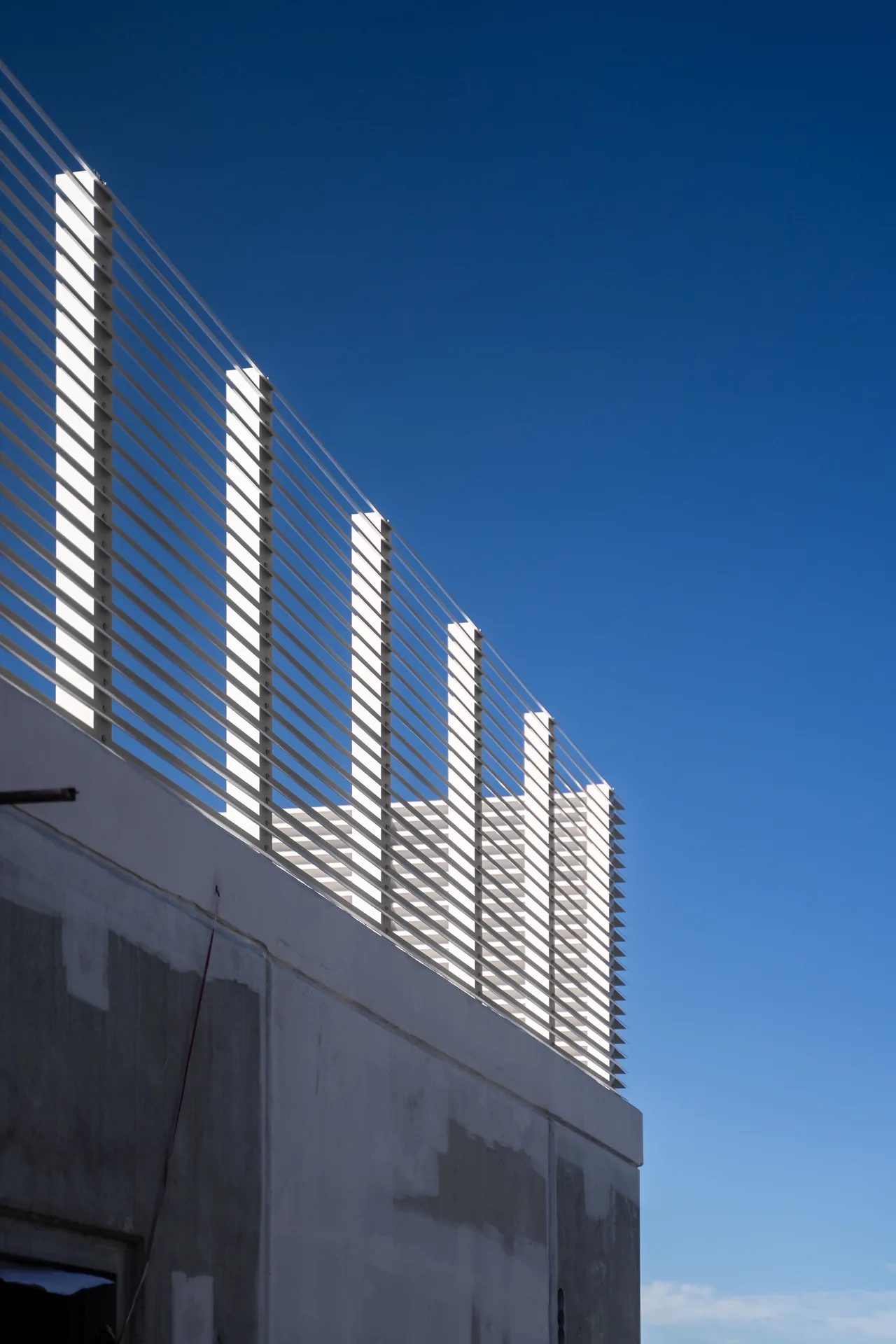
Pantheon systems on commercial facades across South East Queensland: 41 George Street and 50 Quay Street in the Brisbane CBD, Allere at West Village in South Brisbane, The Prince Charles Hospital at Chermside, and Logan State School. Drafted, fabricated and installed by one team out of Brendale, across South East Queensland from the Gold Coast to the Sunshine Coast.
At a glance, with the files.
| System | Blade depth | Rain defence | Aero class | Free open area | Datasheet | Revit |
|---|---|---|---|---|---|---|
| Zeus Hydra-Shield | 150mm | Class A | Class 3 | 63% | RFA | |
| Zeus | 150mm | Class B | Class 2 | 63% | RFA | |
| Thor | 100mm | Class C | Class 2 | 67% | RFA | |
| Odin | 150mm | Class A | Class 1 | 54% | — | |
| Magni | 50mm | Class D | Class 2 | 61% | — | |
| Loki | 60mm | Continuous screening | — | 44% | — |
Ratings reference AS/NZS 4740:2025 for preliminary specification guidance. Magni is airflow-led and rated Class D. Loki is a continuous screening system and carries no rain-defence class. All Pantheon systems carry a 25-year commercial powder-coat warranty. Contact Invicta for project-specific specification support.
Where external aluminium louvres are used.
Plant rooms and mechanical intake or exhaust
The most common use for a performance louvre is the wall of a plant room, where a fan or air-handling unit needs outside air through a facade opening. The louvre has to pass the design airflow at a pressure drop the fan can carry while keeping rain out of the plant. Zeus and Odin are the usual picks; Hydra-Shield where the elevation takes driven rain.
Car parks and podium ventilation
Multi-deck car parks and podiums ventilate through the facade, so the louvre or screen is sized on free open area first and appearance second. Thor and Zeus cover most car-park openings; where the screen is there for looks and the car park ventilates elsewhere, Loki or a batten screen does the job at lower cost.
Rooftop plant concealment
Rooftop chillers, condensers and lift motor rooms need screening that hides the plant without starving it of air. A continuous run of Loki, or a rated louvre where the plant draws through the screen, finishes the roofline as one line. Invicta fabricates the screen, the posts and the fixing to the roof structure as one package.
Facade sun-blades and architectural louvres
Fixed sun-blades and feature louvres are about shading and rhythm rather than airflow, so blade depth, pitch and finish drive the choice. The blades are powder-coated in any of the Dulux commercial ranges and drafted into the facade package with the balustrades and screening so one set of shop drawings covers the elevation.
Choosing between rain defence and airflow.
Every Pantheon louvre is rated under AS/NZS 4740:2025 on three things: how well it keeps rain out, how easily air passes through it, and how much of the opening is clear air path. The three pull against each other, and the choice is which one leads on your opening.
Rain defence: Class A to Class D
Rain-defence class describes how much wind-driven rain gets past the louvre in the standard's test. Class A is the highest, Class D the lowest. Blade shape, depth and overlap earn the class: Odin and Zeus Hydra-Shield are Class A, Zeus is Class B, Thor is Class C and Magni is Class D. Higher rain defence usually means more resistance to air, which is why a Class A louvre is not automatically the right one for a plant intake.
Aerodynamic class: Class 1 to Class 3
Aerodynamic class describes the pressure the louvre adds at a given air velocity. Class 1 is the least resistance, Class 3 the most. Odin is Class 1; Zeus, Thor and Magni are Class 2; Hydra-Shield is Class 3, because the perforated shield that earns it Class A rain defence also adds resistance. Intake and discharge louvres on mechanical plant are commonly sized to a pressure drop the fan can carry, so this class matters most where the fan is fixed.
Free open area
Free open area is the share of the louvre opening that air can actually pass through, measured as AS/NZS 4740:2025 defines it. A higher free open area means more air for the same opening size, or a smaller opening for the same air. The percentage for each system is in the comparison table above, and the airflow calculator turns it into litres per second and pascals for a given opening.
How to choose
Start from what the opening has to do. If a fan or duct is behind it, airflow leads: pick on aerodynamic class and free open area, then take the best rain class that still meets the pressure limit. If the opening faces driven rain and the plant is sensitive, rain defence leads: Odin gives Class A without giving up airflow; Hydra-Shield gives Class A where the fan has headroom. If nothing is drawing air through it, it is a screen, and Loki or a batten system is the right product. For anything in between, send the opening size and the mechanical requirement and Invicta will size it.
The questions we get asked.
What's the difference between Zeus, Thor and Magni?
Zeus is the high-output 150mm louvre, Class B rain defence. Thor is the 100mm louvre, Class C rain defence for more exposed facades. Magni is the compact 50mm airflow-led louvre, Class D rain defence.
Which louvre has the best rain defence?
Zeus Hydra-Shield. A 3mm perforated aluminium front sheet sits over the Zeus 150mm blade system, and it is that added shield that makes it the strongest of the range against driven rain. It keeps Zeus's 63% free open area, because the shield is paid for in pressure drop rather than area: roughly four times Zeus at the same velocity. Odin also rates Class A, at 54% free open area with the lowest pressure drop in the range, so it is the better pick where airflow has to hold up alongside the weather. Specify Hydra-Shield for the most exposed facades, where keeping water out leads.
Are Invicta louvres tested to a standard?
Yes. Zeus, Zeus Hydra-Shield, Thor, Odin and Magni ratings reference AS/NZS 4740:2025. Published figures are for preliminary specification guidance. Contact Invicta for project-specific support.
Do you provide Revit (RFA) and datasheet files?
Yes. PDF datasheets and Revit families are in the comparison table above for the Pantheon profiles.
Is there a warranty on the powder-coat finish?
Yes. The Pantheon range carries a 25-year commercial powder-coat warranty.
Where are Invicta louvres made?
Designed, drafted and fabricated in-house at Invicta's facility in Brendale, Queensland. Australian made.